Most poems are written in silence and read in silence, which is why the first time you speak one into a microphone can feel like a small act of courage. The chatter at the back stops, the room settles, and something you made alone at a kitchen table suddenly belongs to everyone in the building. It is nerve-racking, and it is also the quickest way to find out what your poems actually do.
The good news is that reading well is a craft, not a personality trait. It can be learned in an afternoon of sensible preparation — and the preparation is the same whether you are facing twelve people in a pub back room or two hundred at a festival.
Why a poem behaves differently out loud
On the page, the reader controls the pace. They can pause mid-stanza, go back, let a line sit. In a room, you set the pace and the audience gets one pass. Anything a listener cannot catch in a single hearing — a dense knot of abstraction, a name that needs explaining, a joke that depends on seeing the punctuation — is effectively lost.
That is not an argument for writing simpler poems. It is an argument for testing them. Reading aloud is also the best editing tool you have. Lines that look tidy on screen turn out to be breathless or baggy when you try to say them. Read every draft out loud, even the messy ones, and you will start hearing repeated sounds, accidental tongue-twisters and lines that only work when the eye can see them.
Choosing what to read
For a first night, do not take your most ambitious poem. Take the one you can perform reliably. There is time later for the sequence that needs three voices and a lighting cue.
A few things worth bearing in mind when you pick:
- Two or three short poems beat one long one. You get more chances to connect, and if one lands flat the next can change the mood.
- Start with the most accessible piece and finish with the one you are proudest of. Attention dips in the middle, so put the poem that needs concentration in the middle.
- Avoid anything that needs footnotes. If a listener needs to know who someone is or where a place is, work that into the poem or save it for the page.
- Check your first line. Audiences decide whether to listen within a few seconds, so open with something that gives them a reason to stay.
- If you write long narrative poems, find a section that stands alone and read that.
Timing: the mistake most beginners make
Open mic slots are short. Three to five minutes is common, and busier nights can be tighter still. As a rule of thumb, a page of poetry takes roughly ninety seconds to two minutes to read at a measured pace, and performance is slower than reading to yourself.
So time yourself properly, with a stopwatch rather than a guess. Time the whole thing: the title, the pause between poems, the moment you look up at the end. Aim to finish about thirty seconds early. No host has ever been annoyed by a poet who stopped early; they remember the ones who ran over, and they remember them for the wrong reasons.
If you discover your set is too long, do not speed up. Cut a poem. Have a shorter piece ready to swap in if the room is restless or the night is running late.
Rehearsing without sounding rehearsed
Read standing up. It feels ridiculous for about a minute and then it stops feeling ridiculous, and you will be standing when it counts.
- Mark the page. A single slash for a short breath, a double slash for a longer pause, and a line under any word you want to land.
- Learn the first and last lines by heart. Those are the two moments you most want to deliver with your head up, away from the paper.
- Rehearse the gaps, not just the poems. The fumbling happens in the transitions, when you are shuffling pages and muttering "sorry, just finding it".
- Record yourself once. Listen for pace, filler and where your voice drops at the end of lines. Then delete it and move on; repeated listening encourages tinkering rather than performing.
- Read to one friend, then to a room with the radio on quietly. It is a rough approximation of a noisy pub, and it teaches you to hold your volume.
At the microphone
Arrive early, put your name down, and listen to the readers before you. Watch what works and what does not. Note how the good ones wait for the room to settle before they begin.
Ask the host to set the microphone to your height, or adjust the stand yourself before you start. Hold the mic about a hand's width from your mouth and angle it slightly to the side so hard consonants do not thump. Do not tap it. Do not start while people are still sitting down.
Then speak more slowly and more loudly than feels natural. Project to the back of the room, not to the front row. Look up at the end of lines rather than in the middle — contact with three or four faces is plenty, and it makes the whole room feel included.
Two habits worth dropping early. The first is apologising for the poem before you read it; announcing that a piece is unfinished tells an audience not to bother. The second is panicking when you lose your place. Stop, breathe, find the line, carry on. Listeners are far more patient than poets imagine. Silence, used deliberately, gives a line weight; a few seconds of it will not empty the room.
Finding a night near you
It helps to know what you are looking for before you start hunting. A poetry-only night tends to be quieter and more attentive. A mixed music-and-poetry night is often noisier but easier for a first attempt, partly because the audience is used to people coming and going.
- Search for "poetry open mic", "spoken word night" or "poetry reading" plus your town or the nearest city.
- Check libraries, arts centres, independent bookshops, museums, community centres and pubs with a back room.
- Look at university English and creative writing societies — many run events that are open to the public.
- Try listings and social platforms: Eventbrite, Meetup, and regional poetry groups on Facebook. Local festival programmes often include open mic slots too.
- Ask. Staff in a good bookshop or library usually know where the nearest night is, even if they do not host one.
- Find out how sign-up works. Some nights take names in advance by email; others have a sheet on the door. Either way, arrive early.
If there is genuinely nothing nearby, a back room, a fixed weekday evening and a handful of interested people are enough to start something. Most open mics began as somebody's small idea.
Your first open mic: a short plan
- Pick two short poems: one you trust, one you love.
- Time them aloud twice, with a stopwatch, including the gaps.
- Mark the page, and learn the first and last lines by heart.
- Print a clean copy in large type and put it in a folder that does not rustle.
- Arrive early, sign up, and ask the host about the slot length and the microphone.
- Read slowly, look up at the ends of lines, and stop when the poem stops.
- Stay for the rest of the night. Listening is half of it, and you will learn more from the reader after you than from any advice.
And if the first one goes less well than you hoped — a dry mouth, a shaky start, a line lost halfway — remember that almost nobody in the room is marking you. They are listening, they are on your side, and the next poem is already waiting.
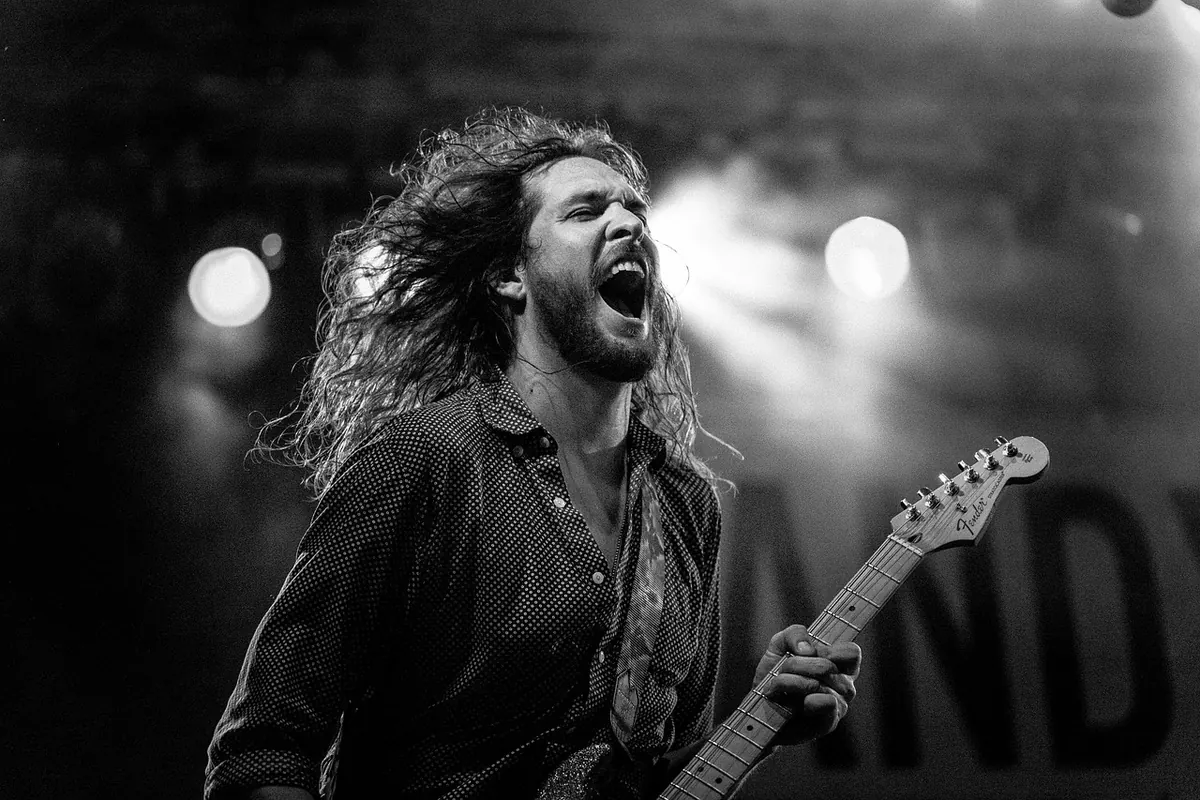
Photo: SeppH / Pixabay